Know how the helm is going.
At 0300, in the wet.
HelmWatch is a hub on the boat that turns your instrument feed into crew performance data. Every helm shift is scored against the boat's polars and set next to the watch roster, on a screen at the companionway and on every crew member's phone.
Get early accessSee what it does
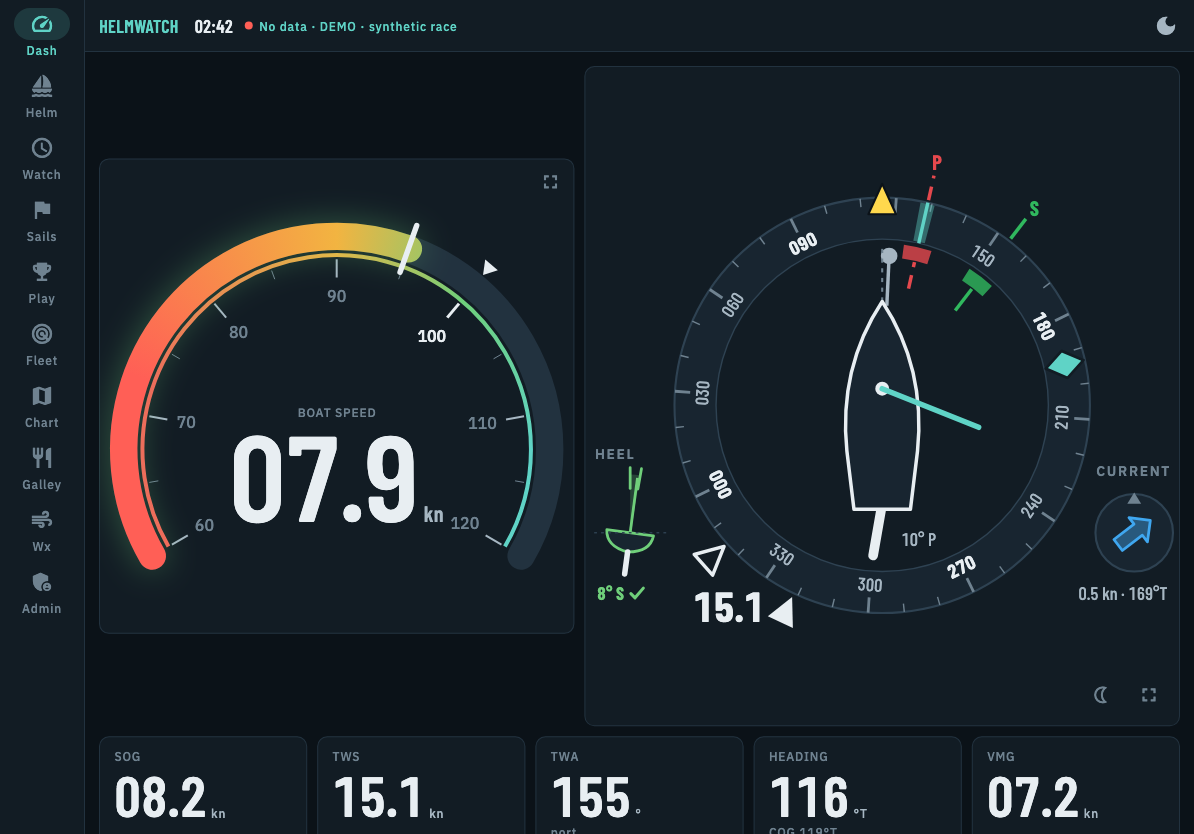
Everything is already on the backbone.
HelmWatch joins it up.
Long races are decided as much by consistent helming and crew management as by boat speed. The data to judge both is on your NMEA 2000 network already.
Helm scoring
Each shift is logged against the instruments and scored against your ORC certificate, so the skipper can compare this hour with the last one.
Steering dial
Heading-up rose with true and apparent wind, target angle, laylines, current, rudder and heel, plus a night view that shows only what the helm steers by.
Watches and fatigue
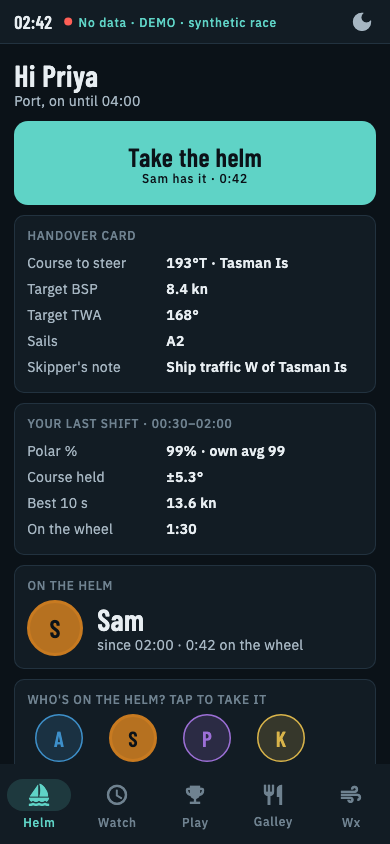
The watch roster, who is due on the helm next, and swap signals for when a helm is fading.
Tacks and gybes
The turn on screen as it happens, with the angle to come out at and how fast speed comes back. Each one is logged against whoever was on the helm.
Bragging rights
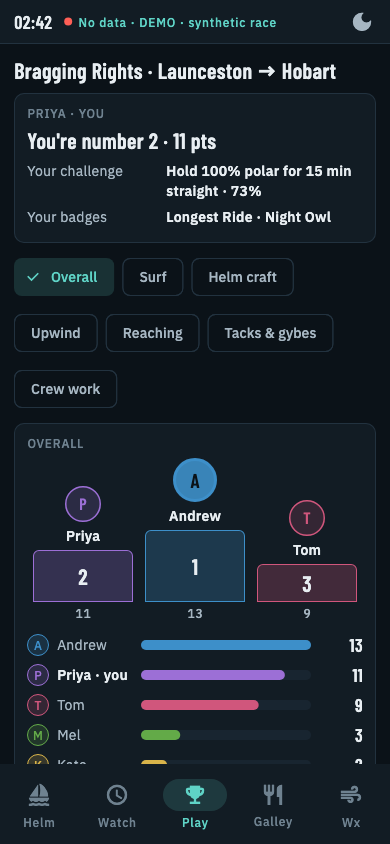
Surf records, best shifts and a game layer to help everyone through a long night.
The post-race log
Every session is recorded and can be replayed, so the crew argues about the log instead of about what they remember.
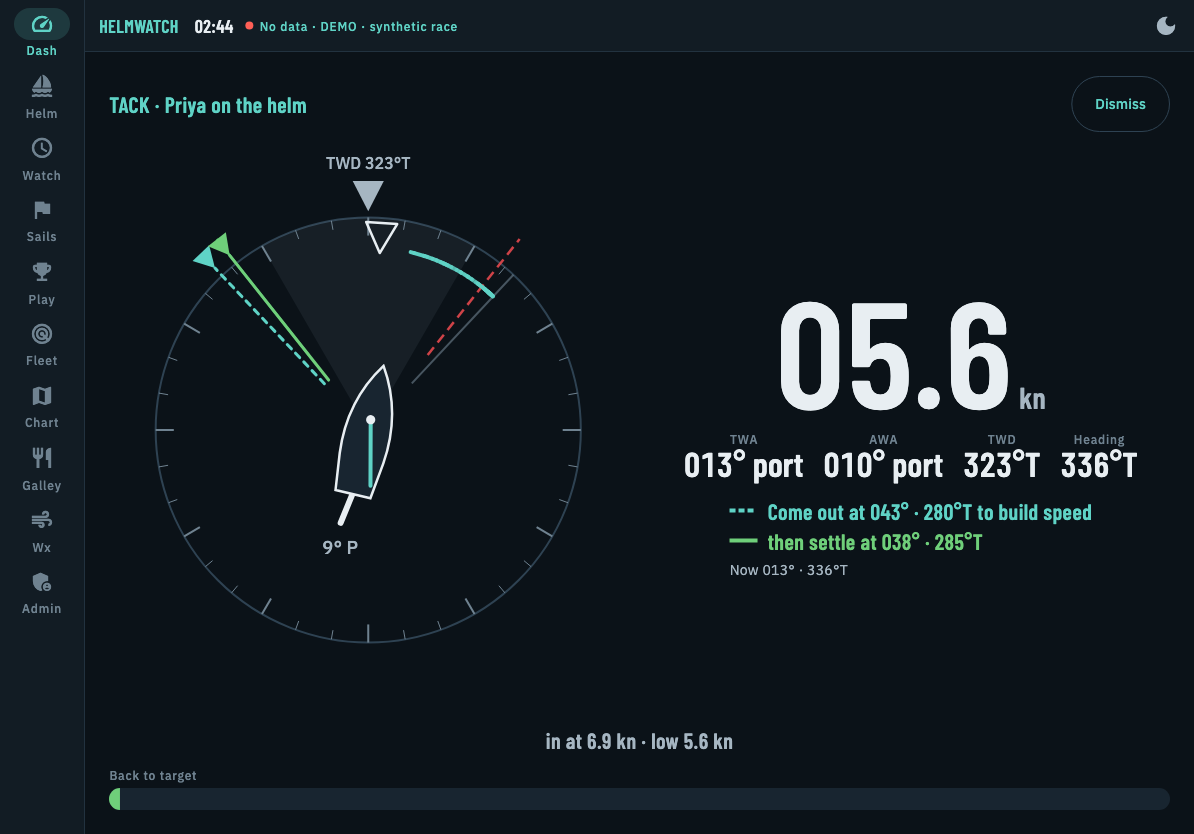
The tack, on screen, while it happens.
The tack screen comes up as the boat starts to turn, before it reaches head to wind. It shows the boat turning through the wind, live true and apparent wind, the laylines and rudder, and where to come out to build speed before settling on the polar's angle.
Then it times the recovery back to target speed.
Three people, three questions.
| Who | Wants to know | Sees it on |
|---|---|---|
| Helm | Am I sailing this boat well, right now? | The mounted screen |
| Skipper | Who should be on the helm, and when do they need relieving? | Tablet or phone |
| Crew | When am I on? How am I doing against the others? | Phone |
A good citizen on your network.
- A small hub goes aboard and joins the NMEA 2000 backbone. It reads your existing instruments and adds no new sensors to fit.
- Everything runs on the boat. Phones and the mounted screen connect over the boat's Wi-Fi. Nothing needs the internet to work.
- Every session is recorded, so every race can be replayed and reviewed afterwards.
- It is honest about what it doesn't know. With no rudder sensor there is no rudder angle, and a stale number shows as stale. It never fills a gap with a guess.
Not a navigation system. HelmWatch adds to your plotter and instruments; it never replaces them, and it never sends navigation data onto the network while your plotter is.
Sailing offshore this season?
HelmWatch is in testing aboard a First 45 in Hobart. If you'd like to try it on your boat, get in touch.
Contact: coming soon